Overview of Continuous Carbonization Equipment
Continuous carbonization equipment is designed to convert biomass or organic residues—such as wood chips, coconut shells, rice husks, bamboo, or sludge-derived solids—into charcoal or biochar in a steady, uninterrupted process. Unlike batch kilns that must be loaded, heated, cooled, and unloaded in cycles, a continuous system feeds raw material in and discharges carbonized product out at a controlled rate. The core design objective is stable temperature control, consistent residence time, and high energy efficiency, often by reusing the combustible gases released during carbonization. If you want to know that how to make charcoal, please click here.
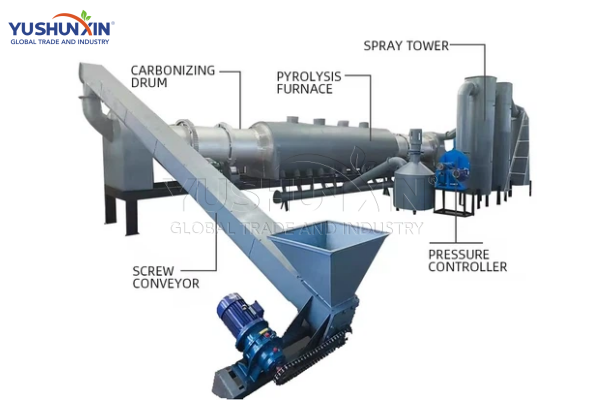
Main Structural Modules and Layout
Most continuous carbonization lines are built around a sealed reactor (often a drum, rotary kiln, or screw-type retort) that limits oxygen to prevent full combustion. Upstream, a feeding module typically includes a hopper, metering screw, and sometimes a drying section to reduce moisture for smoother carbonization. Inside the reactor, heat is applied indirectly through an external furnace or heating jacket, or in some designs by recirculating hot gas around the retort. Downstream, a sealed discharge system drops hot char into a cooling module, commonly a water-cooled screw conveyor, inert cooling chamber, or indirect air cooler designed to prevent re-ignition.
Heating, Gas Handling, and Energy Recovery
A defining feature of continuous carbonization design is how it manages pyrolysis gas (often called syngas or carbonization gas). As biomass heats up, it releases volatile compounds that can be burned in a secondary combustion chamber. Many systems route these gases to a burner that supplies heat back to the reactor, reducing external fuel demand. The gas line usually includes dust removal (cyclone or filter), a condenser or tar separator (depending on the process), and a safety system with flame arrestors and pressure relief. Proper gas handling is critical because tar and condensables can clog pipes and destabilize operation if not addressed in the design.
Temperature Control and Residence Time
Continuous carbonization equipment is engineered to maintain a target temperature range—often roughly 350–700°C depending on whether the goal is biochar, charcoal, or activated-carbon precursor. Temperature sensors along the reactor, variable-speed drives on screws or kiln rotation, and adjustable burners allow operators to tune residence time and heat input. This design ensures consistent fixed-carbon content, volatile matter, and yield, which is especially important for commercial-grade briquetting charcoal or agricultural biochar.
Environmental and Safety Design Considerations
Modern continuous systems incorporate sealed construction, negative-pressure operation, and exhaust treatment to limit smoke, odor, and particulate emissions. Safety designs commonly include oxygen monitoring, emergency nitrogen or steam purge options, and automated shutdown logic if pressure or temperature exceeds limits. By integrating energy recovery and emissions control into the layout, continuous carbonization equipment delivers higher throughput, cleaner operation, and more predictable product quality than traditional batch methods. Visiting: https://www.char-molder.com/product/continuous-carbonization-furnace/
Leave a Reply