Market Snapshot: Why Palm Kernel Shell (PKS) Charcoal Is in Demand
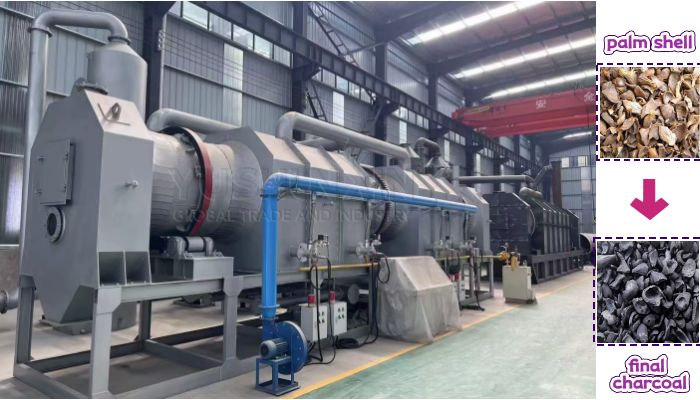
Palm kernel shells are a widely available biomass residue in palm-oil-producing regions, and converting palm shells into charcoal (often via carbonization in kilns or continuous carbonizers) can create a higher-value, easier-to-transport fuel. Demand is typically driven by industrial boilers, food processing, metal and ceramics producers, and sometimes charcoal briquette manufacturers. The key investment appeal is that PKS is often cheaper than wood feedstock and can be sourced in large volumes, enabling scale—provided you have consistent supply contracts and reliable quality control.
Cost Structure: What Investors Pay For
Profitability starts with feedstock economics. Major costs include purchasing PKS, inbound transport, storage (keeping shells dry matters), and handling systems. On the processing side, investors pay for a carbonization unit (batch kiln, semi-continuous, or continuous), dryers if moisture is high, screening/crushing, dust collection, and packaging. Utilities (electricity, start-up fuel), labor, maintenance, and spare parts make up ongoing operating costs. Compliance can be significant: emissions controls, fire prevention systems, wastewater/condensate handling (if produced), and local environmental permits should be included in both CAPEX and OPEX assumptions.
Revenue Streams: How PKS Charcoal Makes Money
The primary revenue is sale of PKS charcoal, commonly priced based on fixed carbon content, ash, moisture, and particle size. Higher-quality charcoal (low ash, consistent sizing, stable calorific value) can command premium pricing and access export or specialty markets. A second revenue lever is briquetting, where fines and smaller particles are upgraded into briquettes, reducing waste and improving selling price per ton. Some systems also recover syngas/heat from carbonization to offset fuel costs, improving margins even if it doesn’t show up as direct revenue.
ROI Drivers: What Most Changes Profitability
Return on investment is primarily controlled by four variables: PKS procurement price, charcoal yield, plant uptime, and selling price/contract stability. Yield can vary meaningfully with moisture content and process control; poor control increases burn-off and lowers fixed carbon, shrinking saleable output. Uptime matters because charcoal plants often have high fixed costs (labor, lease, debt service), so every unplanned shutdown increases unit cost. The best projects secure multi-year feedstock and offtake agreements and invest early in quality testing to meet buyer specs consistently.
Payback Period: What Investors Can Expect
In many operating contexts, a well-run PKS charcoal project aims for payback in the 2–4 year range, assuming reliable feedstock supply, stable demand, and efficient conversion. Projects with weak logistics, inconsistent moisture control, or no premium market access may see payback extend to 5 years or more. Investors should model conservative scenarios—lower charcoal prices, higher PKS costs, and reduced yields—then confirm profitability still holds before committing capital. Visiting: https://www.ysxcharpro.com/product/palm-charcoal-production-line/
Leave a Reply