The short answer is: it depends entirely on your definition of “expensive” and your production goals. Prices range from the cost of a used laptop to that of a new car, dictated by scale, automation, and quality. For a small farmer looking to utilize woodshop waste, the investment is modest. For a serious commercial venture, it’s a significant but justifiable capital expenditure.
The Low End: Manual and Small-Scale Machines ($1,500 – $8,000)
At the most affordable tier are manual piston press machines and small, single-phase electric models. These are low-capacity units, often producing 50-150 kg per hour, requiring considerable manual labor for feeding and briquette removal. They are suitable for micro-enterprises, homesteads, or pilot projects. While the upfront cost is low, the production output and physical labor are high. Machines in this range are often sourced directly from manufacturers in Asia and may have variable build quality and limited after-sales support.
The Commercial Workhorse: Semi-Automatic Hydraulic Presses ($10,000 – $40,000)
This is the most common and practical category for serious small to medium businesses. These are sturdy, motor-driven hydraulic press machines with higher capacity (200-1,000 kg/hour) and consistent pressure, producing dense, high-quality briquettes. They feature conveyor feeders and often include a simple cooling and packaging system. This tier offers the best balance between cost, durability, and output. A reliable, well-engineered machine from a reputable supplier with local service support typically falls in the $20,000 – $30,000 range. This is the core investment for a viable sawdust charcoal briquette production line.
The High-Capacity Industrial Tier: Automatic Briquetting Lines ($50,000 – $200,000+)
For large-scale production (1+ ton per hour), fully automatic production lines are necessary. These integrate automated feeding from a silo, precise moisture control, twin-screw or high-pressure roller briquetting, automated cutting, and sophisticated cooling/drying conveyors. The price escalates quickly with automation, capacity, and ancillary equipment like advanced dryers and packaging systems. These are major industrial investments, justified only by guaranteed high-volume output and sales channels.
The Crucial Hidden Costs: Beyond the Sticker Price
Focusing solely on the machine’s price is a critical mistake. The Total Project Cost must include:
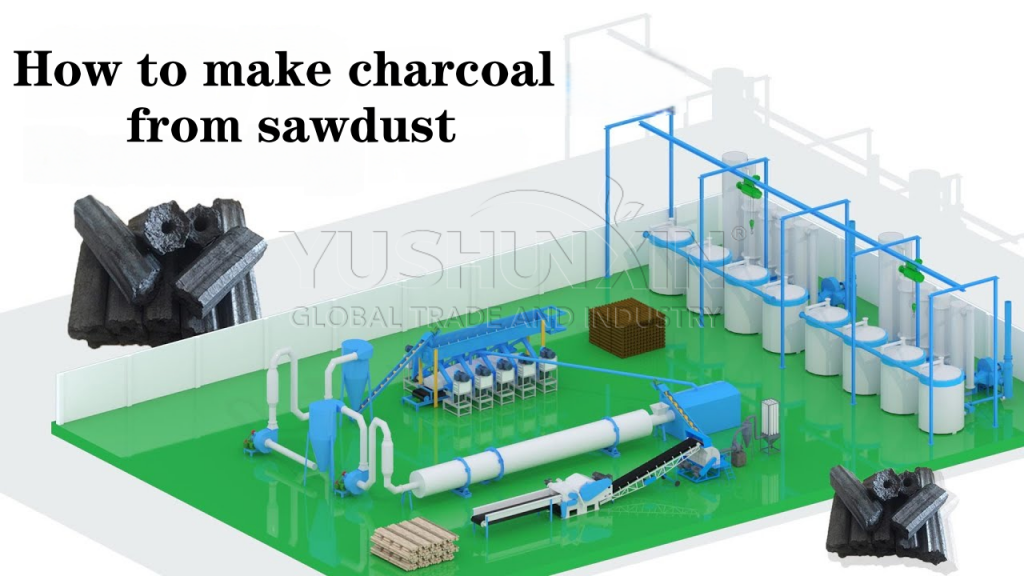
- Raw Material Preparation: A hammer mill, crusher, and dryer for sawdust are essential and can cost $5,000-$25,000 themselves.
- Power & Installation: Industrial machines require three-phase power, potentially needing electrical upgrades. Foundation and installation add cost.
- Operating Costs: This includes electricity, labor for operation and maintenance, spare parts (especially wear parts like molds and rollers), and packaging.
Verdict: An Investment, Not Just a Purchase
Is it expensive? A reliable commercial machine is a $20,000-$35,000 investment. However, when viewed as a production asset that converts low-cost or free waste (sawdust, agricultural residues) into a valuable, marketable fuel, the ROI can be attractive. The key is to buy for your needed capacity from a supplier known for quality and support. A cheaper, unreliable machine that sits broken is infinitely more “expensive” than a robust, slightly costlier machine that runs profitably for years. Visiting: https://www.char-molder.com/product/sawdust-briquette-charcoal-making-machine/
Leave a Reply