Matching the Briquette Line to Your Raw Material
Different charcoal briquette lines are priced differently because they are built around what you feed them. If you start with charcoal fines from a kiln, you may only need crushing, mixing, briquetting, and drying. If you start with raw biomass (sawdust, rice husk, coconut shell), you may need carbonization equipment first, plus a more robust crushing stage to achieve uniform powder. Moisture, ash content, and particle size all affect how much conditioning and screening is required, and each added step changes both capital cost and operating cost.
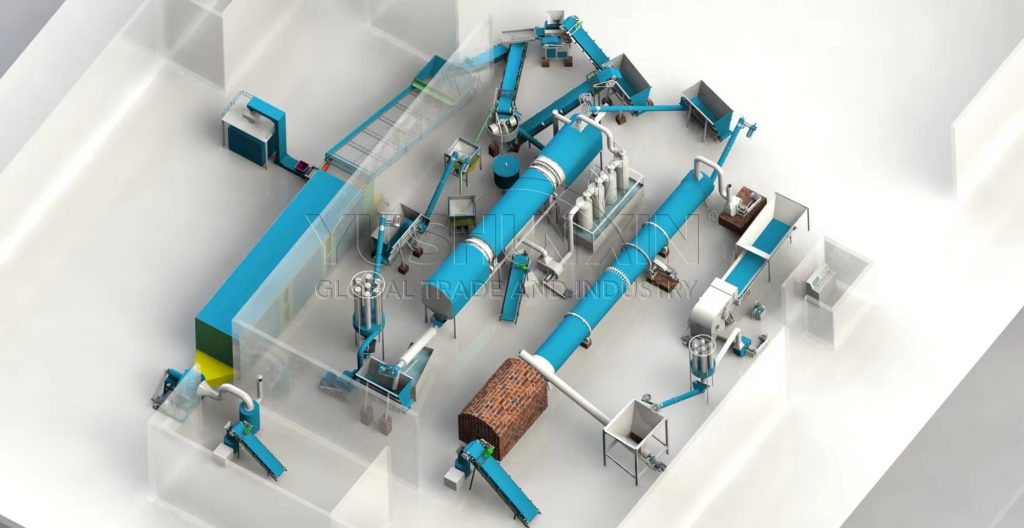
Core Line Options: Basic to Fully Automated
A basic briquette line is typically semi-automatic: a crusher, a mixer, a briquette press, and a simple drying solution. This configuration is lower in price and easier to maintain, but it relies more on skilled operators to keep binder ratio, feed rate, and moisture stable. Mid-level lines add conveyors, metering hoppers, automatic feeding, and better dust collection, improving consistency and reducing labor. Fully automated lines integrate PLC control, continuous weighing, and closed-loop moisture management, wahich increases the upfront price but can pay back through higher uptime, uniform briquette density, and reduced waste.
Equipment Choices That Drive the Price
The briquette press is usually the biggest cost variable. Roller presses suit many charcoal briquettes and offer high output, while hydraulic presses are preferred for certain shapes or higher density demands but may have lower throughput and higher energy use. Drying also changes the budget significantly: natural drying is cheap but slow and weather-dependent; a hot-air dryer or belt dryer improves speed and stability but adds fuel systems, insulation, and controls. If your market requires premium, low-dust products, plan for screening, polishing, and packaging equipment—each stage adds cost but can raise selling price and reduce complaints.
Quality Targets and Market Requirements
Your target briquette—shisha/hookah, BBQ, industrial fuel—should guide configuration decisions. Shisha briquettes often require tighter size tolerance, higher density, and lower odor, pushing you toward cleaner carbonization, finer crushing, and more controlled drying. BBQ briquettes may tolerate wider variation but still benefit from consistent moisture and strong compression to prevent breakage in transport. Industrial briquettes prioritize volume and stable combustion, so output and durability may matter more than perfect appearance.
Choosing the Right Line for Your Budget
The “right” price is the one that matches your sales plan and feedstock reality. Start by defining daily capacity, briquette shape, and target moisture at packaging. Then select the simplest configuration that reliably meets those specs, leaving room to add automation later. A smart approach is modular: invest in a dependable press and dryer first, then upgrade feeding, dust control, and packaging as orders grow. This way, you avoid overpaying for features you won’t use while still building a line that can scale. Visiting: https://www.char-molder.com/product/charcoal-briquette-machine-price/
Leave a Reply