1. Understand Your Raw Material and Market Position
A coconut shell charcoal making line is not just a single machine, but a complete carbonization system designed to convert biomass into high-value charcoal products. Before selecting equipment, buyers should clearly define the raw material quality, moisture content, and final product market (industrial fuel, BBQ charcoal, or activated carbon feedstock). In many thermal conversion projects, stable feedstock and consistent carbon content are the key to long-term profitability rather than just equipment price.
Coconut shells are considered a high-fixed-carbon biomass, which makes them suitable for high-end charcoal and further activation processing. However, improper selection of carbonization technology can reduce yield and increase operating cost.
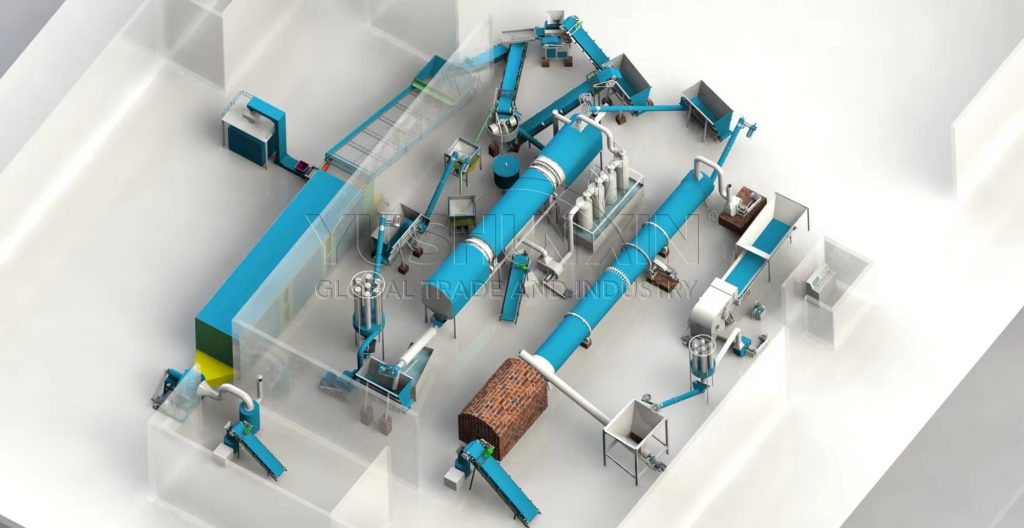
2. Choose the Right Carbonization Technology Type
A profitable production line usually depends on matching technology with production scale.
- Batch carbonization system: Suitable for small and medium investors with flexible raw material supply. It has lower investment cost and simpler operation.
- Semi-continuous system: Balanced solution for stable production and improved efficiency.
- Continuous carbonization line: Designed for industrial-scale projects with stable feedstock and higher automation requirements.
In industrial thermal conversion projects, equipment configuration often includes feeding systems, reactor chambers, heating units, gas recycling systems, and emission control modules to ensure stable operation and energy efficiency.
3. Focus on Energy Efficiency and Gas Recycling Design
Modern coconut shell charcoal making lines are not only carbonization systems but also energy recovery systems. The combustible gas generated during carbonization can be reused as a heating source for the reactor, reducing external fuel consumption.
A well-designed system should include:
- Preheating and drying section
- Oxygen-free carbonization reactor
- Gas purification and recycling system
- Charcoal cooling and discharge system
Efficient heat utilization directly improves production cost control and long-term ROI.
4. Evaluate Output Quality and Downstream Applications
High-quality coconut shell charcoal should have:
- High fixed carbon content
- Low ash content
- Strong calorific value
Depending on market demand, the product can be further processed into:
- BBQ charcoal briquettes
- Industrial fuel
- Activated carbon raw material
The ability to upgrade products determines the long-term revenue potential of the entire production line.
5. Final Investment Considerations
When selecting a coconut shell charcoal making line, investors should not focus only on capacity. Instead, they should evaluate:
- Stability of raw material supply
- Automation level and labor cost
- Energy consumption and fuel self-sufficiency
- Environmental emission compliance
A well-matched system design ensures stable operation and long-term profitability in biomass recycling projects. Visiting: https://www.ysxcharpro.com/product/coconut-shell-charcoal-line/
Leave a Reply