A carbonization and energy recovery plant converts biomass into char while it returns the combustible gas to the process, and that internal loop defines the operating cost that the owner pays every year. You, as a project developer or as a recycling company manager, review the carbonization and energy recovery plant design against the energy bill of a comparable installation before the contract is signed. The difference between the two designs appears in the operating cost long after the purchase price has been forgotten.
Which operating cost items dominate a carbonization plant over time?
The fuel for the start-up burner, the electricity of the drives and the fan, the labour of the shift team and the replacement of the wear parts form the annual cost of the plant. A long-term operating cost of a carbonization plant review compares two thermal designs over ten years, because a cheaper furnace with a higher fuel demand loses the advantage after the second year. You also count the drying energy, since a wet feedstock moves part of the heat demand to the front of the line. The maintenance interval then becomes a financial parameter.
How does recovered heat lower the annual bill?
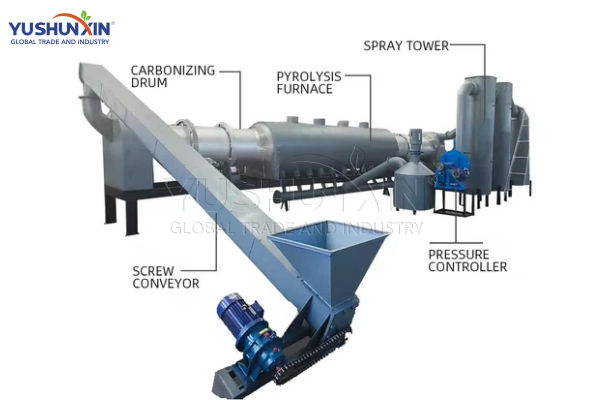
The hot gas that leaves the reactor carries energy that the process can reuse in the dryer or in a steam loop, and that recovery reduces the external fuel that the plant purchases. A palm charcoal production line configuration shows how the dryer and the reactor share one heat circuit, and that arrangement removes a separate furnace from the plant. You measure the temperature of the flue gas at the outlet, because a low value indicates that the recovery section performs as designed. The strategy of energy recovery also covers the gas that returns to the burner.
How does continuous operation reduce the cost per tonne?
A continuous line spreads the fixed cost of the shift team and of the building across more operating hours, and that effect lowers the cost of each tonne of char. An operating cost reduction with continuous carbonization technology study measures the start-up losses of a batch arrangement, because every heating cycle consumes fuel without producing saleable material. You keep the plant at its design load instead of cycling between high and low throughput, and that discipline protects both the equipment and the unit cost. The cooling and screening sections then follow the same rhythm.
Which maintenance decisions protect the long-term budget?
The screw, the discharge seal and the refractory lining wear at a predictable rate, and a scheduled replacement costs less than a failure during the harvest season. You keep a spare set of the consumable parts on site, because a two-week delivery delay stops the line and removes the production of that period. The control system records the operating hours of each unit, and that record turns the maintenance plan into a fact instead of an estimate. A trained operator then recognises the first sign of wear before the product quality changes.
Conclusion for project developers and recycling companies
Continuous carbonization lowers the annual cost of a biomass plant through internal gas use, heat recovery and a stable operating rhythm, and those three effects appear in the budget of every following year. A carbonization plant operating cost advisors team that supplies the energy balance, the maintenance plan and the operator training helps the owner protect that advantage. The demand for char and for removal units keeps the plant busy, and a stable unit cost converts that demand into a durable margin. If your team needs a reference for the line configuration and the operating scope, you can learn more about https://www.ysxcharpro.com/how-does-the-continuous-carbonization-furnaces-work/ before the next design review.