Coconut shells, often considered a waste product, hold immense potential in the production of charcoal briquettes. As a renewable resource, coconut shells are abundant in tropical regions, making them a sustainable and eco-friendly material. This article explores the process of transforming coconut shells into charcoal briquettes, highlighting each step involved and the benefits of using this renewable resource.
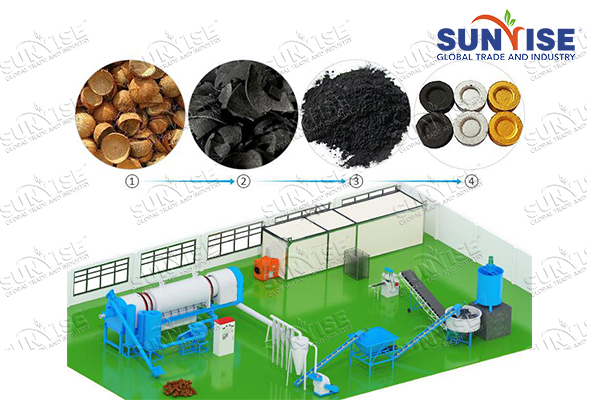
The Benefits of Coconut Shell Charcoal
Environmental Advantages
Coconut shell charcoal is a cleaner alternative to traditional wood-based charcoal. It burns longer and produces less smoke, contributing to a reduction in air pollution. By utilizing coconut shells, waste is minimized, and deforestation is reduced, promoting environmental sustainability.
Economic Prospects
In regions where coconuts are plentiful, converting shells into charcoal briquettes presents economic opportunities. It supports local industries and provides employment, as the production process requires manpower for collection, processing, and distribution.
The Process of Making Charcoal Briquettes from Coconut Shells
Collection and Drying
The process begins with the collection of coconut shells, which are typically obtained as by-products from coconut processing industries. The shells must be thoroughly dried to reduce moisture content, which is crucial for efficient carbonization and quality briquette production.
Carbonization
Once dried, the coconut shells undergo carbonization. This involves heating the shells in a controlled environment where oxygen is limited. The absence of oxygen prevents combustion, allowing the shells to transform into charcoal. This stage is critical as it determines the quality and calorific value of the final charcoal product.
Crushing and Grinding
The carbonized coconut shells are then crushed and ground into fine powder. This step is essential for creating a homogeneous mixture that ensures consistent briquette quality. The fineness of the charcoal powder directly impacts the binding and compaction process in subsequent stages.
Mixing with Binders
To form briquettes, the charcoal powder is mixed with a binding agent. Common binders include starch, molasses, or clay, which help bind the charcoal particles together. The mixture must be uniform to ensure that the briquettes hold their shape and burn efficiently.
Briquetting and Drying
The mixture is fed into a briquetting machine, where it is compressed under high pressure to form solid briquettes. The briquettes are then dried to remove excess moisture, a crucial step to ensure they ignite easily and burn consistently. Sun drying or mechanical dryers can be used, depending on the production scale and climatic conditions.
Ensuring Quality and Efficiency
Quality Control Measures
Throughout the production process, quality control is essential to ensure that the briquettes meet desired standards. Parameters such as moisture content, size, density, and combustion properties are monitored. High-quality briquettes should have a uniform shape, low moisture content, and high calorific value.
Innovations and Improvements
The production of coconut shell charcoal briquettes is continually evolving with technological advancements. Innovations such as automated briquetting machines, improved carbonization methods, and sustainable binder alternatives are enhancing production efficiency and product quality.
Conclusion: A Sustainable Approach
Transforming coconut shells into charcoal briquettes is an ingenious way to utilize agricultural waste while contributing to environmental and economic sustainability. The process not only offers a cleaner and more efficient fuel alternative but also supports local economies in coconut-producing regions. As the demand for sustainable energy solutions grows, coconut shell charcoal briquettes stand as a promising option, showcasing the potential of renewable resources in meeting global energy needs. Visiting: https://www.char-molder.com/product/how-to-make-coconut-charcoal-briquettes/
Leave a Reply