A sawdust charcoal plant converts woodworking waste into a high-value solid fuel, helping solve disposal problems while creating a marketable product. Because sawdust is often inexpensive or locally abundant near sawmills and furniture factories, the business can be attractive where biomass residues are underutilized. Charcoal made from sawdust is commonly sold as briquettes or granular charcoal for household cooking, barbecue, industrial heating, shisha/hookah markets (with stricter quality needs), and sometimes as a precursor for activated carbon. The investment case improves when you can secure steady feedstock, keep moisture under control, and sell into customers who pay a premium for uniform size and consistent burn performance.
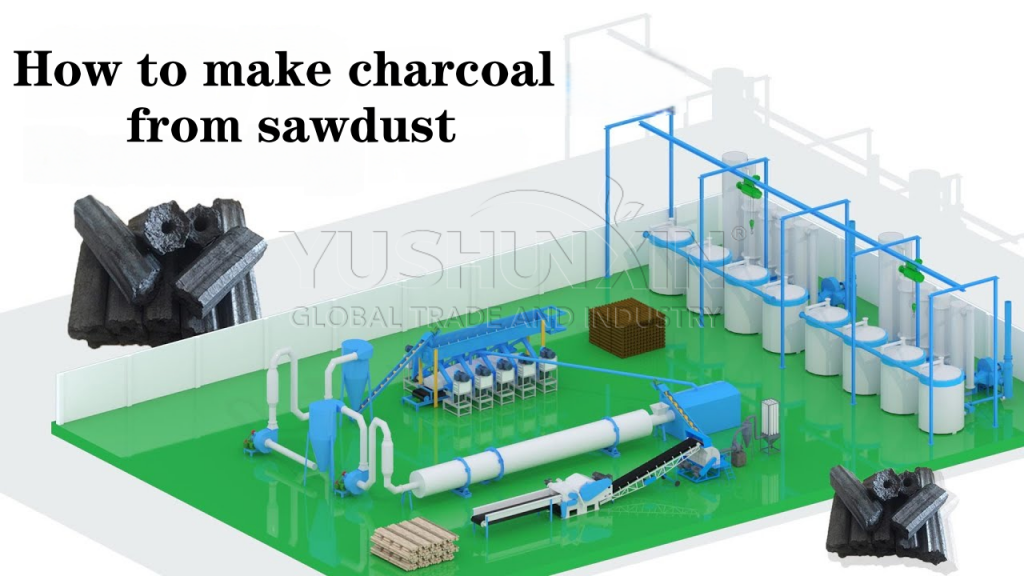
Core Process and Key Equipment
Most projects follow a simple chain: feedstock collection → drying → carbonization → cooling → shaping (optional) → packaging. Drying is critical because high moisture reduces yield and increases fuel consumption; many plants target roughly 8–15% moisture before carbonization. Carbonization can be done with batch kilns or continuous carbonizers; continuous systems usually cost more but provide steadier output and better labor efficiency. If you plan to produce briquettes, you’ll also need a crusher, mixer, binder dosing system (often starch), briquette press, and a drying/curing line. A good dust collection system is important for safety and product quality, especially around crushing and screening steps.
Site Selection, Utilities, and Layout
Choose a site close to sawdust sources to reduce transport cost and supply risk. You’ll want reliable electricity, water (mainly for cooling and cleaning), and sufficient space for raw material storage under cover—wet sawdust quickly becomes a bottleneck. A practical layout separates “dirty” zones (receiving, drying, carbonization) from “clean” zones (briquetting, packaging, finished goods), minimizing contamination and improving workflow. Also plan access for trucks, fire lanes, and buffer space to meet local zoning and environmental requirements.
Investment Costs and Operating Economics
Capital cost depends heavily on capacity, automation level, and whether you add briquetting. Beyond the main machine, budget for civil works, conveyors, electrical cabinets, emission control, spare parts, and commissioning. Operating costs typically include labor, power, binder (if briquetting), packaging, maintenance, and transportation. Revenue is driven by yield (charcoal percentage), product grade, and consistency. Higher-margin products generally require better drying control, stable carbonization temperature, and careful screening to reduce fines.
Permits, Emissions, and Safety Considerations
Carbonization produces smoke and volatile gases; responsible plants use afterburners, condensers, or other emission controls to meet local standards. Fire risk is real—hot charcoal can self-ignite if packaged too early—so cooling time, temperature checks, and safe storage procedures matter. Dust control reduces explosion risk and improves worker health. Before purchasing equipment, confirm permitting requirements for air emissions, solid waste, and industrial safety, and design your plant accordingly.
Practical Steps to Start Strong
Begin with a feedstock survey (volume, moisture, price), then validate demand with sample customers and pricing. Select a process route—charcoal only or charcoal briquettes—based on your target market. Finally, request performance data from suppliers (yield, fuel use, emissions approach) and plan a commissioning period to stabilize quality. With dependable raw material, controlled moisture, and a clear sales channel, a sawdust charcoal plant can scale into a steady, cash-generating operation. Visiting: https://www.ysxcharpro.com/product/sawdust-charcoal-machine-line/
Leave a Reply