A biochar carbon farming solution generates revenue from the soil amendment that farms buy and from the removal units that the programme registers, and the profit of the plant depends on the operating cost that sits between those two incomes. You, as a recycling company manager or as a project developer, examine the biochar carbon farming solution against the annual budget before the equipment order. The plant that controls its operating cost keeps a margin when the product price falls.
Which cost items dominate a biochar plant?
The fuel for the dryer, the electricity of the drives and the fans, the labour of the shift team and the replacement of the wear parts form the recurring cost of the plant. A biochar production operating cost reduction review ranks those items by their share, because the largest item deserves the first improvement. You also count the transport of the biomass, since a distant supply adds a cost that the plant cannot control. The biochar yield per tonne then converts those costs into a unit figure.
How does the drying stage reduce the fuel bill?
A feedstock with a high moisture content forces the reactor to evaporate water before the reaction starts, and that evaporation consumes fuel that the process could use elsewhere. An operating budget for a biochar plant therefore includes the moisture of each delivery, because a wet batch changes the cost of the week. You store the biomass under cover and schedule the drying before the rainy season, and those two habits protect the budget. The heat that the cooling section releases then preheats the incoming material.
How does the line design lower the labour per tonne?
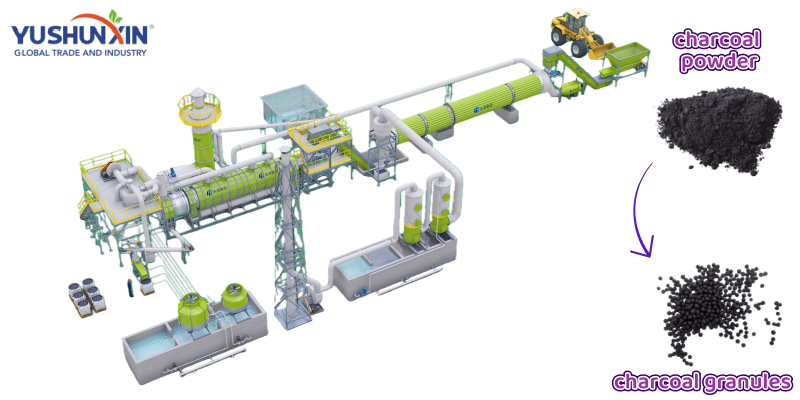
A continuous line with an automated feeding system removes the manual handling that dominates the labour cost of a small plant. A charcoal production line operating efficiency review places the controls of several units in one room, and that arrangement allows one operator to supervise the circuit. You train the shift team on the start-up sequence, because a wrong start costs more than the training. The plant then runs with a smaller crew and a stable output.
How does the operator verify the saving?
A monthly report with the energy per tonne, the labour per tonne and the maintenance per tonne gives the manager a comparable figure for each period. You compare that figure with the commissioning baseline, and the comparison shows whether the process still performs as designed. The report also identifies the month in which a change of feedstock produced its effect. The manager then negotiates the next year budget with measured data.
Conclusion for recycling companies and project developers
Biochar production operating costs fall when the plant dries the feedstock properly, automates the feeding and follows a maintenance plan, and those three measures compound over the life of the line. A biochar operating cost advisors team that supplies the energy balance, the maintenance schedule and the operator training helps the company protect its margin. The demand for soil amendment and for removal units keeps the plant busy, and a stable cost converts that demand into profit. If your team needs a reference for the line configuration and the operating scope, you can learn more about https://www.ysxcharpro.com/whats-the-price-for-a-continuous-carbonization-furnace/ before the next budget review.