The continuous carbonization furnace payback period compares the capital that the owner invests with the cash that the plant returns each year, and the configuration with the shortest period is not always the cheapest unit. You, as a project developer or as a recycling company manager, examine the continuous carbonization furnace payback period across two or three configurations before the order. The payback period then becomes a decision criterion that the board can compare.
Which investment items decide the payback?
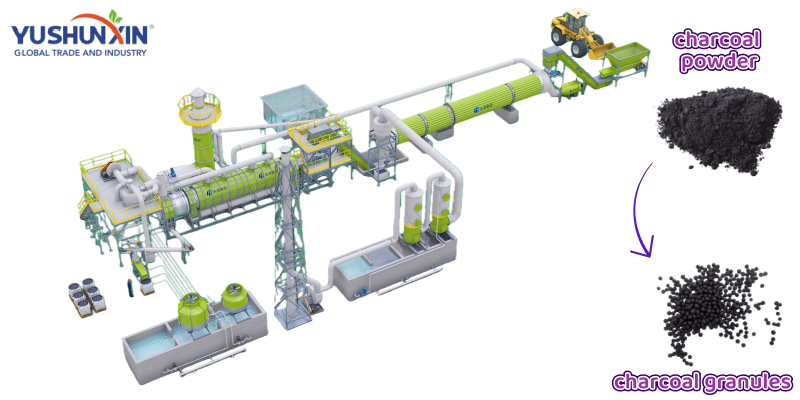
The reactor, the dryer, the cooling and screening section and the packing line form the equipment block, and the foundation and the utilities form the site block. A fastest payback in carbonization investment comparison separates those two blocks, because a cheaper furnace with a costly dryer changes the total. You add the working capital for the first feedstock purchase, and that amount affects the first year. The analysis then uses the full investment.
How does the technology choice change the payback?
A continuous reactor with internal gas return consumes less external fuel than a batch unit, and that saving shortens the payback even when the purchase price is higher. A continuous furnace performance for payback review measures the fuel per tonne during a trial, because the declared figure often differs from the operating value. You compare two configurations with the same feedstock and the same product, and that comparison shows the real difference. The technology with the lower unit cost wins over a ten-year horizon.
Which operating assumptions shorten the payback?
The operating hours, the moisture of the feedstock and the price of the char decide the annual cash, and each of those three assumptions deserves a conservative value. An investment comparison for a carbonization furnace tests a low price and a wet feedstock, because that combination produces the weakest case. The project that still shows a positive cash in that case carries a defensible plan. The maintenance interval of the wear parts then completes the model.
How does a developer compare two offers?
A single table with the capacity, the fuel consumption, the maintenance interval and the price turns two offers into one decision. You ask each supplier for the mass balance and the performance guarantee, and the two documents answer most of the technical questions. The offer that excludes the dryer or the gas cleaning appears with a lower price and a hidden cost. The board then approves the configuration with the shortest honest payback.
Conclusion for project developers and recycling companies
The fastest payback comes from the configuration with the lowest unit cost over its life, not from the lowest purchase price, and the operating assumptions decide the result. A carbonization payback advisors team that supplies the energy balance, the cost table and the comparison matrix helps the developer select the right furnace. The demand for char keeps the plant valuable, and a short payback protects the investment during a price correction. If your team needs a reference for the line configuration and the payback scope, you can learn more about https://www.ysxcharpro.com/whats-the-price-for-a-continuous-carbonization-furnace/ before the next approval meeting.