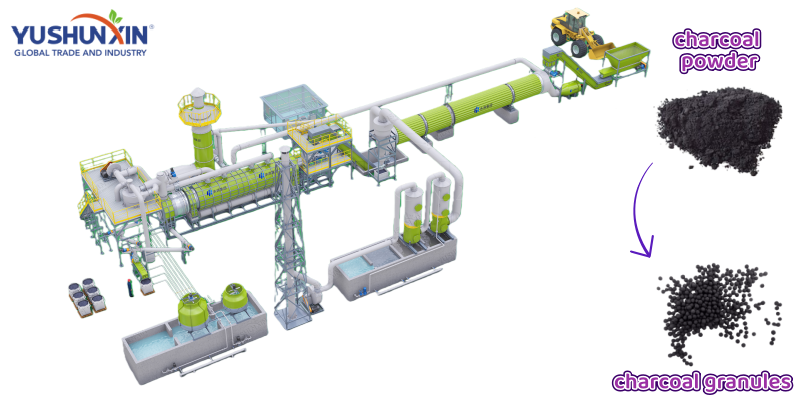
A useful continuous carbonization production line cost breakdown gives every supplier the same capacity, feedstock and product-quality basis before the project team compares quotations. The breakdown covers the dryer, feeder, continuous carbonization furnace, syngas treatment system, discharge machinery, screening equipment and control package. procurement also includes transport, installation, commissioning, training and spare parts, because a low equipment quotation can hide major site costs. The buyer then separates fixed scope from optional items and marks the performance guarantees that each bidder must provide. A clear comparison protects the project from buying the lowest headline number instead of the most reliable production line.
Which cost elements belong in a continuous carbonization production line comparison?
The comparison starts with mechanical equipment, electrical controls, installation materials and freight to the project site. An supplier bid comparison for carbonization equipment gives each supplier the same biomass moisture, particle size, ash content and target output so their proposals describe the same duty. The buyer also requests the motor list, utility consumption, foundation loads and required operating staff. Optional items such as a dryer, heat recovery loop, briquette press and spare furnace internals stay separate from the base scope. Delivery time, warranty, training and commissioning support enter the matrix as scored criteria. This structure shows the full cost of a functioning carbonization line and prevents a hidden gap from appearing after contract signature.
How should technical performance weigh against the quoted cost?
A proposal with a lower initial cost may require more fuel, more maintenance or a larger operating crew. The buyer compares carbon yield, temperature stability, syngas reuse, energy consumption and the expected service life of the reactor and screw components. A continuous carbonization line procurement evaluation records the guaranteed throughput at a stated feedstock condition and links payment to a performance test. The continuous carbonization furnace price factors page helps the team identify which design choices drive both cost and reliability. Suppliers also submit a maintenance schedule for seals, bearings, drives, filters and refractory parts. The evaluation favors a bid that meets the output target with a clear spare-parts plan, because long-term uptime carries more value than a small purchase discount.
Which supplier evidence reduces procurement risk before the order?
The buyer reviews similar projects, reference contacts, factory test records and the supplier’s ability to support installation abroad. Engineering drawings should show the feeding system, furnace zones, gas path, discharge mechanism and access points for maintenance. The supplier also provides control logic, alarm lists and a commissioning method rather than a brochure alone. Factory acceptance tests check motors, rotation, sensors and control panels before shipment. Commercial review examines warranty exclusions, response time, spare-parts lead time and performance-test remedies. A supplier that explains the interface between the carbonization equipment and the owner’s dryer or power system gives the project a more credible delivery plan.
How does the owner close the procurement decision and control changes?
The final comparison converts technical scores, cost and delivery risk into one decision record with traceable assumptions. The owner fixes the equipment scope, battery limits, utilities and acceptance criteria in the contract before release for manufacture. A change-control process prices any later modification to feedstock, capacity or product size. The project team also tracks documents, inspection points and shipping milestones against the production schedule. Award approval includes the total installed cost and the life-cycle cost of energy, maintenance and spare parts. That discipline gives the owner a defensible supplier choice and protects the continuous carbonization production line from uncontrolled scope growth during construction.
Conclusion for carbonization project buyers
Supplier bids become comparable only when every proposal follows one technical and commercial template. The evaluation must include the dryer, feeder, furnace, syngas system, discharge machinery, screening equipment, installation and operator support. An carbonization equipment procurement support that checks factory tests and reference plants helps the buyer judge delivery capability. The contract also needs a measured performance test, a spare-parts list and a change-control process. A detailed reference for comparing the continuous carbonization production line cost breakdown appears at https://www.ysxcharpro.com/whats-the-price-for-a-continuous-carbonization-furnace/.