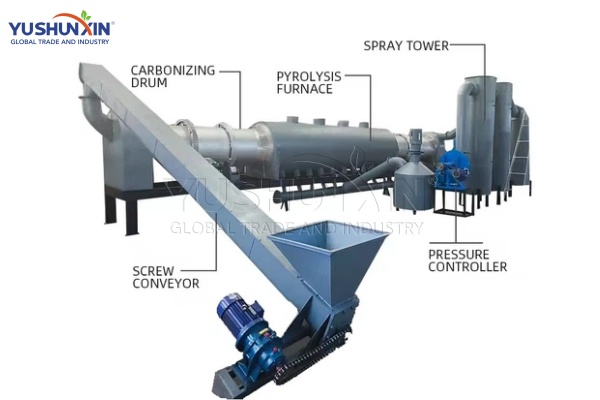
Project investors can replicate a turnkey carbon credit solution plant across several sites when the design, the monitoring plan and the contract follow one standard, and that scalability gives a project investor a repeatable model. You, as a project investor or as a project developer, examine the turnkey carbon credit solution plant as one module that the portfolio can repeat. The portfolio then grows without a new engineering cycle at each site. The project team also maintains a document register for process drawings, factory test reports, operator training and warranty actions, because that shared record gives every site the same installation and commissioning baseline for the continuous carbonization equipment and feeding system.
Which elements must stay identical across sites?
The equipment package, the process parameters and the monitoring method form the three elements that the portfolio keeps identical, because that identity reduces the engineering cost and the registration effort. Scaling a carbon credit project across sites also keeps the same data platform, and that platform allows the investor to compare the performance of each plant. You document the standard once and apply it to every site. The second plant then starts faster than the first.
How does the feedstock differ between sites?
The residue of each site changes with the local industry, and a design that accepts a range of feedstock protects the portfolio. A palm charcoal line for multi site projects adapts the drying and the feeding to the local material, and that adaptation keeps the core equipment unchanged. You test the residue of each candidate site before the order. The portfolio then selects the sites that fit the range.
How does the investor organise the portfolio?
A multi site carbon credit project allocates one standard module to each site and one central team to the registration, the monitoring and the commercial contracts. The multi site carbon credit project therefore shares the fixed cost of the certification across the plants. You keep one data standard for all sites, and that standard allows a single audit. The investor receives a portfolio result instead of separate reports.
How does the developer control the rollout?
A phased rollout starts with one reference plant and adds a second site after the first performance test. You keep the same acceptance protocol at each site, and that protocol protects the quality of the registered units. The project office reports the progress of every site in one table. The portfolio then grows at a controlled pace. The spare-parts plan covers drives, sensors, rotary valves and refractory materials, because a missing long-lead item can stop the production line long after commissioning.
Conclusion for project investors and developers
Scaling a carbon credit project works when the module, the monitoring and the contract stay standard and when the feedstock fits a defined range. A carbon credit project scaling advisors team that supplies the standard module, the registration file and the rollout plan helps the investor build a portfolio. The demand for removal units keeps rising, and a portfolio that starts early captures the best contracts. If your team needs a reference for the line configuration and the scaling scope, you can learn more about https://www.ysxcharpro.com/how-does-the-continuous-carbonization-furnaces-work/ before the next investment review.