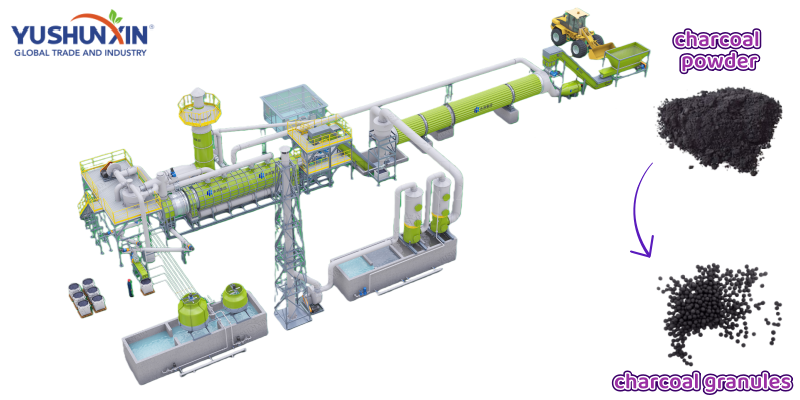
Biochar projects earn money from the product and from the verified removal unit, and both incomes depend on a plant that runs at a stable temperature with a predictable output, so you, as a project developer or as a plant manager, focus on operating efficiency rather than on capacity alone. Carbon removal biochar production starts with the drying step, continues inside the reactor and finishes with cooling, screening and packing. The operating efficiency of that chain decides the carbon content of the char and the cost of every tonne.
Which technology features reduce energy demand?
A sealed feeder with speed control matches the material flow to the reaction, and that match avoids the excess heat that a variable feed rate creates. Multi zone temperature control keeps the reaction inside the designed window, and that stability raises the fixed carbon content of the output. Insulation of the reactor and of the hot gas duct reduces radiation loss. Your engineers measure the specific energy per tonne during the performance test, and that figure becomes the operating target.
How does gas recovery improve the operating result?
The reactor releases combustible gas, and that gas returns to the burner to supply part of the process heat. A biochar production efficiency technology review quantifies the share of heat that the plant covers internally, and that share defines the external fuel purchase. The surplus gas can feed a dryer or a small generator, and that option reduces the operating cost further. A buffer tank stabilises the gas flow when the feed changes.
Which equipment raises the value of the product?
A rotary dryer standardises moisture before the reactor, and that standardisation improves both the reaction and the consistency of the char. A screening section separates the fine fraction from the coarse product, and that separation allows the plant to serve agricultural and industrial buyers at the same time. A continuous carbonization furnace selection that matches the local feedstock protects the yield. Your commercial team then prices each fraction according to the specification of the buyer.
How do you document the carbon removal claim?
The registration programme requires records of the feedstock mass, the process temperature, the residence time and the carbon content of the product. A biochar plant efficiency improvement programme uses the same data to detect process drift, and that detection protects the value of every issued credit. Your laboratory samples each shift, and the sampling record supports both the sales contract and the registry file.
Conclusion for project developers and plant managers
Efficiency in a biochar plant comes from the interaction of drying, temperature control and gas recovery rather than from one machine. A biochar production efficiency consultants team that supplies energy balance data, reference figures and commissioning support helps the plant reach its design output in the first season. Biochar also improves soil carbon when growers apply it correctly, and that agronomic benefit supports the market for the product. If your team needs a reference for the process configuration and the efficiency figures, you can learn more about https://www.ysxcharpro.com/how-does-the-continuous-carbonization-furnaces-work/ before the next review.