The continuous carbonization furnace processing capacity follows the diameter of the screw, the length of the heated zone and the residence time that the feedstock needs, and each of those details converts into tonnes per hour. You, as an EPC contractor or as a project developer, examine the continuous carbonization furnace processing capacity against the residue volume of the region before the order. A furnace that exceeds the supply runs below its design rate.
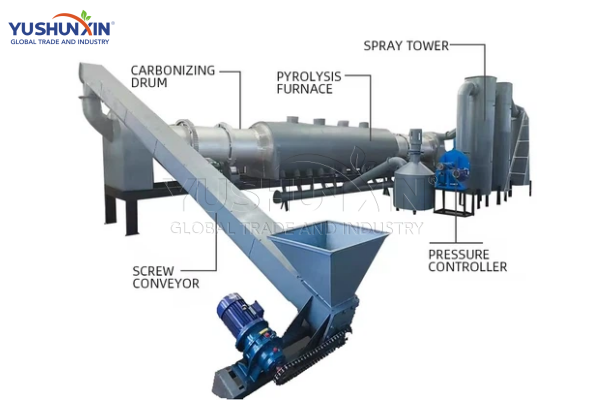
Which geometry details set the capacity?
The screw diameter, the pitch and the length of the heated zone define the volume that the reactor holds, and that volume sets the throughput. An engineering details for furnace capacity review also examines the wall thickness, because the heat transfer through a thick wall limits the reaction rate. You compare two furnace sizes with the same feedstock, and that comparison shows the real difference. The design then reflects the measured values.
How does the residence time change the capacity?
A longer residence time converts more of the biomass into char, but it also reduces the hourly output of the reactor. A capacity design for a continuous carbonization furnace balances the two effects, because a high yield with a low throughput may cost more per tonne. You test two residence times with the local residue, and that test shows the point that maximises the margin. The screw speed and furnace capacity then follow the chosen time.
How do the dryer and the cooler fit the capacity?
The dryer must remove the moisture at the rate of the reactor, and the cooler must accept the full output of the char. You size both units for the maximum rate and add a margin, because a bottleneck at either end stops the furnace. The control system then coordinates the three units. The plant reaches its declared capacity.
How does the contractor verify the capacity?
A full-shift test with the design feedstock gives the achieved tonnage, and that figure becomes the performance value of the contract. You keep the weighbridge tickets and the operating log, because the two records show whether a shortfall comes from the equipment or from the feeding. The contractor then corrects the bottleneck before the handover. The plant receives a measured capacity.
Conclusion for EPC contractors and project developers
Furnace capacity is an engineering result of the screw geometry, the residence time and the utilities, and a balanced design reaches the declared figure. A furnace capacity engineers team that supplies the capacity calculation, the layout and the test protocol helps the contractor deliver the plant. The demand for char keeps the line valuable, and a furnace with a verified capacity serves that demand. If your team needs a reference for the line configuration and the capacity scope, you can learn more about https://www.ysxcharpro.com/product/palm-charcoal-production-line/ before the next design review. The contractor also records the actual capacity of each shift, and that record shows the owner whether the furnace reaches the figure written in the contract before the final payment and in the warranty period.