Procurement decides how quickly a heat recovery loop starts saving fuel, and you, as a project investor or as an engineering manager, choose the contract model that matches your team and your risk appetite. A turnkey waste heat recovery project procurement model assigns design, supply, installation and commissioning to one supplier, so the interface risk stays outside your organisation. The turnkey waste heat recovery system project then reaches performance testing with a single schedule, and that schedule protects the revenue of the carbonization plant.
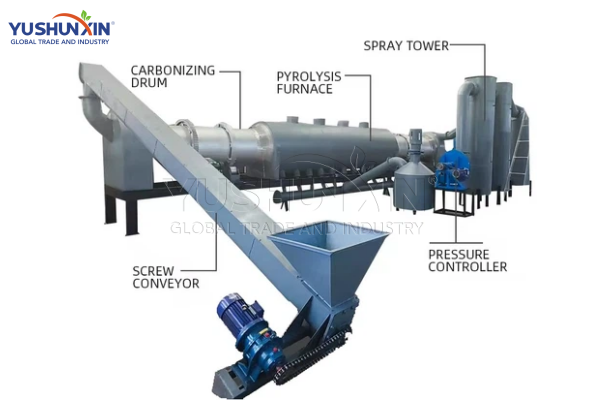
Which procurement models suit a carbonization heat recovery project?
A full turnkey contract works for companies without an in-house thermal engineering team, because the supplier carries the design responsibility for the furnace, the heat exchanger and the ducting. A split package model suits companies that already operate a boiler house, because the plant owner handles the tie-in and the supplier delivers the recovery skid. An equipment-only purchase fits companies with strong construction experience, and that option lowers the initial price while raising the coordination effort. Your procurement office compares these three models against the cash flow profile of the project, and that comparison usually reveals the cheapest total cost rather than the lowest quotation.
Which technical items belong in the turnkey scope?
The scope covers the flue duct, the heat exchanger, the circulation pump, the expansion tank, the control valves, the insulation works and the connection to the dryer or the boiler. Each item carries a performance guarantee, and that guarantee defines the acceptance test that your engineers witness. A waste heat recovery system procurement planning review also fixes the gas temperature range, the dust load and the maximum pressure drop that the recovery loop tolerates. Treatment equipment with removable tube bundles shortens the cleaning interval, and that detail matters when the plant processes dusty biomass such as rice husk or straw.
How do you compare quotations for the same recovery duty?
A fair comparison uses the same duty point, because a quotation for a smaller heat exchanger always looks cheaper until the recovered energy falls short of the plant demand. Your review registers the recovered thermal power, the pressure drop, the fan power, the material grade and the warranty period for every bidder. The carbonization furnace heat recovery design of the host plant defines the boundary conditions, and that document keeps the bidders on one technical basis. You then compare the total cost of ownership across five years rather than the purchase price alone.
How does the contract protect the buyer during execution?
Payment milestones tied to fabrication, delivery, mechanical completion and performance testing keep the cash position of the buyer under control. A carbonization waste heat recovery turnkey delivery clause also defines the spare part list, the training hours and the response time for technical support. Your project team receives the drawings before shipment, and that early review removes the installation surprises that delay commissioning. The performance test then converts the contractual promise into measured fuel savings.
Conclusion for project investors and plant owners
A clear procurement model turns a technical upgrade into a predictable investment, because scope, guarantee and payment terms follow one document. A carbonization equipment procurement partner that supplies process calculations, drawings and commissioning support reduces the coordination cost that the plant owner would otherwise carry. The heat exchanger sits at the centre of the recovery loop, and its sizing decides how much energy the plant captures from the process. If your procurement team needs a reference for the scope and the guarantee structure, you can learn more about https://www.ysxcharpro.com/how-does-the-continuous-carbonization-furnaces-work/ before the tender closes.